We took Ariel and Caroline to see the newly opened “Little Mermaid,” the musical that’s been crucified by just about every NY critic. It seems there’s no element of the show that they haven’t found bìŧçh-wørŧhÿ.
We loved it.
Personally, I think that for a show like this, critics should be required to take a small child with them so they can see it through their eyes.
Caroline was literally on the edge of her seat, goggle-eyed at the splendor of it all. Ariel (my daughter, not the mermaid) was likewise entranced. I thought it was a lot of fun.
The theater was packed beyond all belief. I’m hoping that people vote with their feet and wallets.
PAD
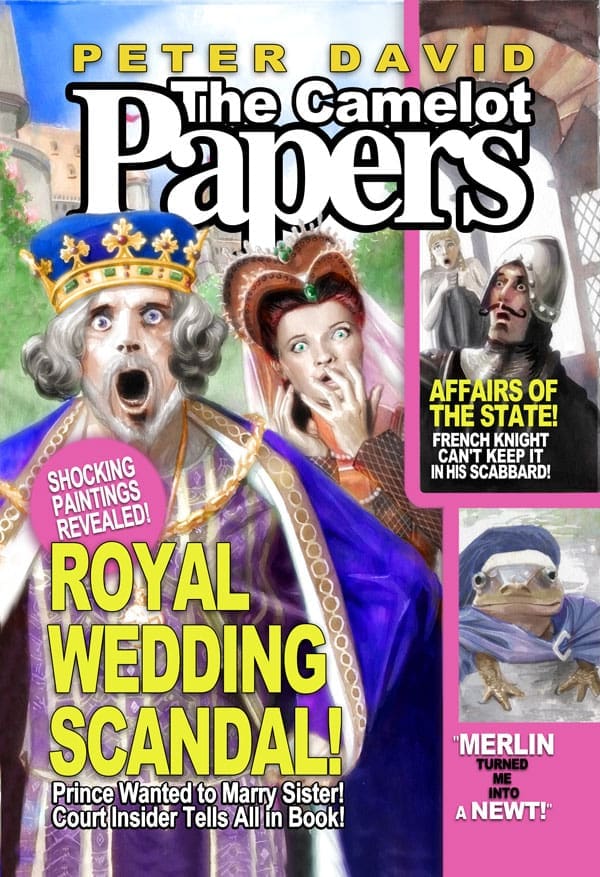


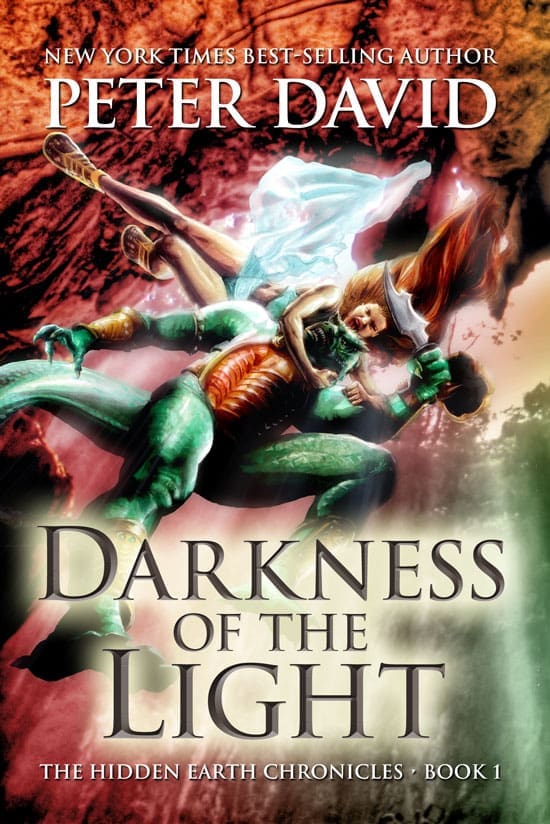
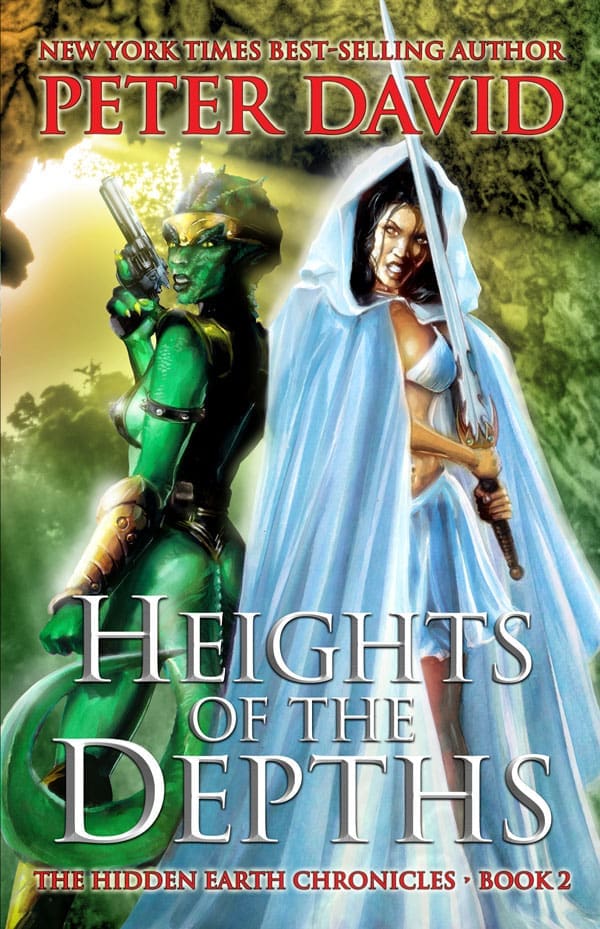
 •
• 
And if Disney takes a tale and updates it for a particular audience today…why does that bother anyone?
Let me preface this by saying that I adore Disney’s version of the Little Mermaid.
Why does changing from the original bother anyone? I would say that it depends on your expectations going in, and if there is a plausible reason for the changes (i.e. the sad ending of Andersen’s version – out-sads Bambi IMHO).
For a non-Disney example, I recently saw “I Am Legend” in the theater. I went in expecting significant changes due to the fact that the book is set in 1976, and technology has changed drastically since then. Therefore, I judged the movie on it’s own merits rather than comparing it to the book by Matheson.
On the other hand, a few years back I went to see “The Bone Collector” (based on the book of the same name), and I came out very disappointed because I had not anticipated major modifications. There were huge changes in not only the main plot, but they changed the identity of the murderer! Had I not been expecting something closer to the book, I probably would have enjoyed the movie more. For the life of me, I still don’t understand why they felt the need to modify the story as much as they did.
If a work of art is able to speak to generation after generation, that it has such fundamental truths that new audiences can connect with it on some level, then why rework it to a degree that it’s no longer the initial work of art?
Who says it isn’t? “The Little Mermaid” is a story about a little mermaid who falls in love with a landbound prince and is willing to leave her world behind in order to pursue her love.
There are subtleties that are part of the Anderson tale that were absent from the film, true. Some of them don’t date especially well. Feminists are all over the original Anderson, citing all manner of “insulting to women” subtext. And yeah, they didn’t kill the Mermaid at the end. And a century ago, traveling troupes of actors went around England performing Shakespeare and giving the tragedies happy endings.
PAD
We really loved Lion King on the stage, in a way I never thought would happen. Of course the story is primed for the stage…but the costuming was the issue, and all who have seen it fairly know they pulled that off. It seems that the critics of Little Mermaid focus on the trappings of stage and costume. What I don’t understand is how does on manage to convey a submerged setting where fish and crustaceans play major character roles. At least with the lions, hyenas, and other savanah characters from Lion King, everyone is still a mammal, and shares many of the same features. Fish and such are very non-mammal, and no amount of costume is going to be able to change that.
——–
The Finding Nemo Show at Disney World’s Animal Kingdom does a pretty good job of it. Like the Lion King, some of it is people holding puppets, while in others it’s people in costume.
David
Rick Keating: “If someone is going to review (or criticize, if you prefer that term) a movie, play, book, concert, Broadway show, whatever, I believe he or she should state why he or she likes or dislikes it.”
Geddy Lee (and anyone who doesn’t know who Geddy is is just uncool) has said he distrusts fawningly positive reviews as much as he does excessively negative ones. But every once in awhile he finds a review that is sensitive to what he’s trying to do, combines praise with constructive criticism, and actually helps him improve what he does.
It’s my feeling, however, that most critics approach art focused on what they can say about it, rather than first exploring what it can say to them.
“The Finding Nemo Show at Disney World’s Animal Kingdom does a pretty good job of it. Like the Lion King, some of it is people holding puppets, while in others it’s people in costume.
David”
While I was reading some of the critics’ reviews, I had the thought that at some point…maybe during the initial run, maybe for a travelling show…production would include the same kind of puppet/costumes that have been succesful in the past. At the same time, I was thinking that Disney, in allowing the director/producer to go in a different direction, made a pretty bold choice, one that supports creative expression and freedom. In a way, it surprises me that this move is panned by the critics, rather than embraced.
On changing future iterations of entertainment…I used to read the Anita Blake novels…haven’t since they went more SCinemax than romantic horror…but I know that, between the hardcover and paperback version of one book, a key scene was re-written to make a sexual encounter less rape-like than the first printing made it out to be.
The thing of it is, writing, and story-telling overall, is a continuing, evoloving process. When you’re dealing with fiction, you’re never ever done writing a story. Every creative writing course I’ve ever had, and some non-creative writing courses, have stressed how the process of writing is never done. You just stop at some point and let the work go. But you could always come back and think about how to improve a passage, or write a scene better, or make the plot tighter or resonate with the reader more. Sometimes those changes are small and subtle, and sometimes they are grand and sweeping.
And sometimes they aren’t done by you at all, but by whoever takes up your story and decides to tell it in the future.
Recently, our son (2 years, 2 months) has started asking me to tell him stories, rather than reading him stories from books. I can tell them with the lights off, which makes them better suited to bed-time. The other day, I was telling him my Three Little Pigs story, which changes slightly every time I tell it. My wife was in the room with me, and she kept interrupting by telling me how the story “really went.”
I eventually had to stop her, thanking her, and told her that if I was interested in telling the same story every time, I’d read it out of a book. I wasn’t particularly interested in her version of the story, and told her that she could tell it her way when she was doing the telling.
Because it’s, far as I know, fiction. There are no historical three pigs that built their houses out of straw, wood, and brick. There’s no big bad wolf who could huff and puff and blow houses down. I’m not telling the story of the Normandy invasions…I’m making up a bed-time story. I can change it, embellish, and be as creative as I can be. Even from night to night, the telling changes a bit.
That’s what story-telling IS. That’s what makes it great…because there’s always room for improvement. Not every change is going to appeal to everyone, and if that’s why someone doens’t like a version, I understand. But if someone doesn’t like a version for the simple reason that it’s different from another version, that I don’t understand.
In some cases I don’t mind a massive change during adaptation, but there are cases where I think the criticism of the changes is valid.
Take the Lord of the Rings movies, for example. My favorite character in the book was Gimli. So I wasn’t very happy with a lot of the short jokes. I felt they made the character seem more silly than the version in the book. A friend thought I was just saying that they should have made it exactly like the book for the sake of making it like the book, but that wasn’t it. I really did feel that the version in the book was better and the movie would have been better if they’d done that particular detail the way the book did.
Another problem with adaptation changes is when the new version makes a faithful adaptation less likely. Fans of the Asimov’s “I Robot” had been talking about a movie adaptation for years. When Will Smith’s “I Robot” came out, it definitely wasn’t that movie, but it was just close enough that it will be a long time before anyone considers making a movie like what Asimov wrote. That’s not to say that it was a bad movie. I thought it was a very good Will Smith action movie and even got some of the heart of Asimov’s work across. I just wish they had changed it slightly more and used a different title so the “I Robot” I’d like to see had a slightly better chance of becoming a reality.
Okay, I just double checked my info on Will Smith’s I robot. I probably should have done that first, since it turns out that’s actually a very poor example of an adaptation.
It turns out that Smith’s movie was pretty much written before they got the rights to call the I, Robot title, then they just sprinkled a little of Asimov’s standard details (like the laws of robotics) into it. I had thought it started off with Asimov and got morphed into something different, but apparently it was never much of an adaptation of Asimov’s stuff at all.
The Bowdlerized Shakespeare and expurgated performances were silly, and not a very good model of respect for artistic intent. Perhaps next we should have the tragic tale of the sad day Jean DeWolff had a tummy ache, but felt better really soon. (Wait, with the current storyline that could happen.)
Maybe it’s just me, but I see a big difference between dissolving into foam and living happily ever after with a snappy animal sidekick and a happy marriage. There’s nothing wrong with the stories Disney wants to tell, but a lot wrong with pretending they are the original stories. (Remember, in the real Pinocchio, “Jiminy Cricket” didn’t have a name, and died very early on.) When PAD was writing “the Incredible Hulk” nobody said “Yeah…This is the REAL story of Edward Hyde. That other stuff is outdated and stupid.” Of course, keeping the familiar names and ignoring the story is all about name recognition and good will, but it’s also dishonest and lazy.
I kind of got turned off from Disney on Broadway after Aida. I’ve loved the stage version of Beauty and the Beast ever since the original cast, because I liked the fairy tale and the Disney movie in the first place and I thought the added songs were more or less the best music I’d heard in anything with Disney’s name on it.
Lion King… well, I’m just not a visual enough person for it, I guess, or at least not visual the right way. I want to be able to see people act, not just move around in costumes, and they obstruct the ability to see what any given person brought to the performance like none of the ones in BatB. About half of the songs from the movie annoyed me even as a child, and I didn’t think there was anything particularly special about the new songs.
Aida was more mediocre music and flashy sets and costumes, and since I’m not so much into the spectacle (though it doesn’t bother me either if it doesn’t get in the way of the stuff I really like- see my abiding love for Beauty and the Beast), I’ve pretty much decided that Disney’s plan for their Broadway shows diverged from anything that would be of interest to me somewhere around 1997.
PAD:
“Who says it isn’t? “The Little Mermaid” is a story about a little mermaid who falls in love with a landbound prince and is willing to leave her world behind in order to pursue her love.”
I agree with you here. But I was too vague in that my question was meant to be ‘in general’ as opposed to how it relates to “The Little Mermaid” in particular. I’d give an example but it would be extreme and entirely unreasonable.
THEN…
“There are subtleties that are part of the Anderson tale that were absent from the film, true. Some of them don’t date especially well. Feminists are all over the original Anderson, citing all manner of “insulting to women” subtext.”
I also agree with this. Especially since it was made primarily for children. As adults we already ‘get’ certain things in these (kids)films that kids don’t because those things are aimed at us to keep us interested as well as the kids. Too much of that and the kids (target audience) could get bored.
LATER THAT SAME DAY…
“And a century ago, traveling troupes of actors went around England performing Shakespeare and giving the tragedies happy endings.”
Yikes!
A tradgedy is a tradgedy on purpose, is it not?
Salutations,
M
Generally, I think folks (and critics) are on safe ground looking at a piece and saying that it doesn’t achieve what it intends to do, or that it falls because the craftsmanship is not good. That’s judging a piece for what a piece is, not judging it for you want it to be. I’ll admit I had a friend who wrote the books for a couple of the musicals mentioned here. He never has problems with folks saying that his work didn’t work…but he’ll kick your ášš if you try to go the “true to the source” route (well, actually, his wife would…she’s a bit fiestier…)
Jonathan (the other one):
“You only hang out with people who have a picture box and beer handy? 🙂
(Hey, at least I stopped punning – for now… [insert evil chuckle here])”
Ok, you have to stop the Q-tip when there’s resistance!
We could go on like this for weeks, you know…
M
Critics have one big disadvantage over regular viewers. They have to see stuff whether they like it or not.
If I saw a movie, a play, or anything else, it’s because I thought there was at least a chance that I’d like it. If something doesn’t look appealing to me, I don’t watch it. If I had to watch everything that came out whether I wanted to or not, I’d turn into a little ball of rage that hates everything.
Plus, critics sometimes see way too much in general. If they see 20 productions in a year that are all similar, it doesn’t matter if they’re good or not, eventually the critics will get sick of them. Meanwhile the people in the audiences have only seen a few of those productions, so they’re not tired of them. I think this is why movie reviewers sometimes love those edgy, experimental movies more than the public. They’ve seen so many movies that they’ve started valuing originality more than other factors.
roger tang:
“I’ll admit I had a friend who wrote the books for a couple of the musicals mentioned here. He never has problems with folks saying that his work didn’t work…but he’ll kick your ášš if you try to go the “true to the source” route (well, actually, his wife would…she’s a bit fiestier…)”
Wouldn’t it be more difficult to stay true to the source when writing an adaptation of an adaptation when the first adaptation wasn’t true to the source?
Also, I’ve never read an adaptation of a musical, so I’m wondering how the musical parts are handled in print, if at all.
Good Day,
M
It’s amazing what can set people off about movies. I loved The Little Mermaid when I first saw it (on video, not the theater). It told me Disney had finally quit doing cutesy movies like The Rescuers which I loathed as a child. The animation and music were wonderful, and the story was pretty decent along with it.
Beauty and the Beast came out, and I just didn’t care for it. It seemed to me that Disney took all the PC-criticisms of TLM and redid the movie. Rather than a girl blindly chasing her man, here was a “modern” girl who refused to be so blind. So, I’ve never cared for it. Why rehash the story? I wanted something different.
The Lion King is the ultimate Disney movie to my mind. About the only thing I would change about the movie would be to replace Matthew Broderick. His voice just doesn’t say “King” to me – not even “young king”. I guess he’s just too much Ferris Beuller in my brain. Still, I can watch that movie over and over. The fact that I was a first-time father just when that movie came out has a lot to do with my affection for it, I’m sure.
Someone mentioned Lord of the Rings. To this day, I only have two significant “objections” – and I’ll use the term loosely since I love the films. 1) Aragorn not wanting to be king, but having to be convinced, and 2) Frodo telling Sam to leave – which he does. Beyond that, PJ did a job beyond my wildest expectations.
Still, like most critics and fans, what works for you might not for me.
I used to have problems with the changed-up Disney versions of classic stories, but then I learned to stop worrying and love the anything-but-a-bomb.
It was pointed out to me that this is not “Hans Christian Andersen’s The Little Mermaid”. This is “Disney’s The Little Mermaid”. (For that matter, this is “Disney’s The Little Mermaid [Broadway version]”.) It is not being presented a faithful version of the original fairytale; it is being presented as a *Disney* version of it, and anyone worth their salt knows that means that all bets are off, especially if the original didn’t have an upbeat ending.
Once I accepted that crucial difference, I was able to handle all sorts of adaptations much better, able to appreciate them (or not) largely on their own merits.
“Eragon” still sucked, though. “Spamalot” annoyed me because I couldn’t manage the separation needed. “Young Frankenstein” troubled me for some of the same reasons; the parts I enjoyed most were the ones where it didn’t hew to the film.
On the topic of negative reviews: The example I’ve always kept with me of a badly-written negative review was my local paper’s review of Baseketball, which spent the entire review going on and on about how stupid the humor was. My reaction was: It’s a film by the Zuckers, pioneers of the throw-everything-at-the-wall-and-see-what-sticks school of comedy, and the creators of South Park, which isn’t exactly stupid so much as it uses stupid humor in an intelligent way. It was a given that it would contain stupid humor; but was it entertaining? The answer seems to have been “no, not especially,” and I hadn’t been planning to see it anyway, but it missed the point of writing reviews for the public on a pretty basic level: Different people enjoy different things, and just pointing out that a work of art contains something you don’t like doesn’t address whether someone else will or not. (It’s like reviews that say things like “This film is terrible because it’s full of gratuitous nudity!” For some people, that’s likely to make them more interested in seeing the film, not less.)
The best negative review I’ve ever read was Entertainment Weekly’s review of Freddy Got Fingered. Everyone else was busy wringing their hands about how it was full of gross humor and OMG he fondles a horse and it’s the end of American culture. EW panned it as well (they gave it an F) but they pointed out that it failed as a film for Tom Green fans, because his comic persona was of a guy who’s in control of events and his character in the film, a guy who’s unhappy because his father doesn’t appreciate him, doesn’t work with that persona. In other words, they paid attention to the level the film tried to work at and who the intended potential audience was, and told them not to bother, and why.
Critics are in a funny situation. I used to, when I was SLIGHTLY younger and more negative, despise all of them and the horses they rode in on and the presents they left on the road and pay them all the attention that I give to the instructions on a shampoo bottle. I’ve realized, though, that critics are doing what they’re paid to do–clue people in on what a given thing is like. I’ve seen people trashing SF from A C Clarke to, well, something starting with Z. I’ve been told by people that they couldn’t read Tolkien because(GASP!) they had to READ all that stuff!! I still have only slightly more patience for critics than I do for they who write into Dear Abby(PEOPLE–is there NO ONE in your life that you can turn to besides someone in a paper you’ve never met whilst simultaneously sharing your problem and making yourself look like a goon?) but at least I’m no longer tempted to egg their cars at random. I’d say most people are educated enough to make their OWN choices, but then I look at what’s the rage where I work, and I have to wonder….
“Can’t speak for Ariel, obviously. But when I saw the Ice Capades or somesuch when I was eight, the appeal was simple: spectacle.”
Thus proving, that amongst other things not mentioned in National Treasure, Ben Franklin invented ice shows.
…SF from A C Clarke to, well, something starting with Z.
Roger Zelazny, perhaps?
Well, the difference between the movie and the original Anderson story is substantial. In both versions, the prince must fall in love with the mermaid or she will lose her life as she knows it. However, while the Anderson version demonstrates that you can’t count on the reciprocation of your love, the Disney version demonstrates you can.
Whenever you present anything to the public, you have to balance intimate and epic elements. Like a conversation in a restaurant, you have to keep the attention of your audience you are acquainted with (like the people at your table) and you have to make yourself understandable to a general audience (like anyone listening in from another table).
Society bestowed no significant privileges to youth until the 20th century, when they became a distinct buying market. The Anderson version is aimed at adults, making a story of adult agendas transparent to children. The Disney version reworks the Anderson story for children in a culture where children enjoy more privilege than the previous generation.
Speaking as an amateur critic myself (writing sans pay for the Armchair Critic), I think the essence of criticism is communicating whether you liked or disliked something, and why. Some critics feel the need to tear down everything (I’m thinking of the great ol’ cartoon THE CRITIC: “I give this movie my highest rating ever: eight out of ten”), some feel the need to praise only the pretentious and obscure (though I enjoyed seeing movies like RATATOUILLE, SUPERBAD and KNOCKED UP turn up on many crtiics’ best of the year lists), and some have their own agendas (like THE VILLAGE VOICE, where they can’t review a sneaker without some Bush-bashing). I (half-) jokingly differentiate between what I’ve heard about a movie from critics and from humans.
I am *not* a fan of significantly changing a work from its original source material into something almost unrecognizable, whether it’s replacing thought with mindless action (I, ROBOT), sadness with happiness (THE NATURAL), or a 180-degree difference from the original (THE SCARLET LETTER with Demi Moore). PAD has argued that the original works remain unchanged no matter how different the adaption is; that may be true, but if you see a play before reading it, your perception of that play will be filtered through that performance. And there should be no need to use the title of something famous to essentially advertise an otherwise unrelated movie: Will Smith didn’t have to call it I, ROBOT to make a shootin, slo-mo film about robots dámņìŧ! (A friend of mine said that the Will Smith I AM LEGEND is a good movie — if you forget everything about the original novella. Personally I wanted to see Bruce Campbell star in it.)
I see here a tinge of the pseudo-egalitarian Khmer Rouge-style class leveling that hates experts of any kind. Obviously, some critics have poor taste, and some are woefully ignorant of the subjects they choose to criticize, but there is nothing inferior or suspicious about criticism purely on the basis of it being criticism. To loathe critics as a class is the same thing as distrusting astrophysicists to tell one about supernovas — ooh, icky INTELLECTUALS, my god! While Genes Siskel was alive I trusted his taste more than Roger Ebert’s – simply because he liked many of the same movies I did – but I’ve found Ebert’s criticism almost always based on experience and sound critical theory, consistent with his known tastes, and easily defensible. There are other critics who are similarly worthy, and far too many who aren’t, but very few who are much inferior in taste to an average person chosen at random. To distrust stage and film critics plying their trade isn’t much different from preferring only books by people with no talent for writing.
On the title: Yay fish puns!
Also, dámņìŧ James! Now I want to see Bruce Campbell in I Am Legend.
Then you’ll probably love THEY CALL ME BRUCE which has the can’t miss idea of a bunch of film geeks kidnapping Bruce Campbell (played, in an inspired bit of casting, by Bruce Campbell) to fight the actual monster that is attacking their town because…he’s Bruce Campbell! Who ELSE would you get?
Posted by bobb alfred
And if Disney takes a tale and updates it for a particular audience today…why does that bother anyone? They haven’t gone back and changed or destroyed all the written versions of the older story, nor do they claim that older version got things wrong. Most of the time, they don’t even claim to be a version of the older work, usually using an “inspired by” or “based on” credit.
Gresham’s Law (“Bad money drives out good.”) applies equally – or even more so – to popular entertainment. The Judy Garland “Wizard of Oz”, another cultural icon that i have never been able to stomach, having read the Baum original years before i saw it, has so displaced the actual story in the public mind that the main criticism of Disney’s “Return to Oz”, which was (for the most part) fairly faithful to the books it was based on, was “They got it wrong – it’s not like the original!”
(Which point, i think, the last sentence of your previous graph:
speaks to.)
posted by PAD
And a century ago, traveling troupes of actors went around England performing Shakespeare and giving the tragedies happy endings.
And in earlier centuries – apparently into the 18th Century or even the 19th (according to Babrbar Hambley’s notes at the end of her Ban January novel involving murder in an opera company) – opera producers often added popular songs that had nothing to do with the plot to famous operas, and often the opera was cut short after the death of the tenor because he was what the public had come to see. It was wrong then, too.
OTOH, it’s almost traditional for all but the most fanatically-purist companies to rewrite the Lord High Executioner’s “I’ve Got a Little List” with local and contemporaneous references, even if they’re doing the rest of “The Mikado” absolutely straight. (Well, as straight as you can do G&S…)
Posted by bobb alfred
On changing future iterations of entertainment…I used to read the Anita Blake novels…haven’t since they went more SCinemax than romantic horror…but I know that, between the hardcover and paperback version of one book, a key scene was re-written to make a sexual encounter less rape-like than the first printing made it out to be.
The SF novel that Newt Gingrich “co-wrote” (i hesitate to flat-out state that i think he had no real input, since i don’t want to insult my brother’s publisher) was rewritten to tone down some sex scenes between a printed excerpt that Baen put out to promote it in advance and its actual publication. And the cover of a Barbara Hambley novel (the third “Silicone Mage” book, i think) was cropped and modified to make it more of a “fantasy” cover and less of a “horror” cover between the prepeints the puiblisher sent out to bookstores as solicitiations and publication.
Posted by Jason M. Bryant
Another problem with adaptation changes is when the new version makes a faithful adaptation less likely. Fans of the Asimov’s “I Robot” had been talking about a movie adaptation for years. When Will Smith’s “I Robot” came out, it definitely wasn’t that movie, but it was just close enough that it will be a long time before anyone considers making a movie like what Asimov wrote.
Exactly.
Posted by Mitch Evans
Wouldn’t it be more difficult to stay true to the source when writing an adaptation of an adaptation when the first adaptation wasn’t true to the source?
The really hard part is *translating* a musical – for instance, the classic off-Broadway production of “Threepenny Opera” (which, at various times, numbered Beatrice Arthur, Ed Asner, John Astin and Paul Dooley among its cast – the MGM Records cast album very clearly features Astin and Arthur, and Arthur is in one of the jacket photos, which you can see here), is carefully labelled “Adapted” (not “translated”) by Marc Blitzstein, and several of the songs are definitely *not* even close to literal translations of the originals. And that includes “Moritat” (“Mack the Knife”) and the “Army Song”.
And they had to rearrange the “Jealousy Duet” for Charlotte Wolfson (as Polly Peachum) and Bea Arthur (as Macheath’s other wife, Lucy Brown) – Wolfson was rather petite, and Bea Arthur was … well … Bea Arthur, and they decided to change the line “He likes a big, *complete* girl…” from Polly’s part to Lucy’s part. (And when she sings it on the CD, my mind’s eye persists in showing me a twenty-something Bea Arthur proudly throwing her shoulders back…)
Posted by Mark L
Beauty and the Beast came out, and I just didn’t care for it. It seemed to me that Disney took all the PC-criticisms of TLM and redid the movie. Rather than a girl blindly chasing her man, here was a “modern” girl who refused to be so blind. So, I’ve never cared for it. Why rehash the story? I wanted something different.
My biggest gripe with Disney’s “Beauty and the Beast” is its inversion of the story that completely throws away any real suspense and destroys the ending of the original story.
Posted by Jim
It is not being presented a faithful version of the original fairytale; it is being presented as a *Disney* version of it, and anyone worth their salt knows that means that all bets are off, especially if the original didn’t have an upbeat ending.
You seriously overestimate the erudition and general savvy of the average moviegoer; i would guess that a huge percentage of the audience for either Disney’s “Little Mermaid” or “Beauty and the Beast” was more than vaguely aware that they were adaptations – but i do remember hearing about people complaining that the Disnewy “B&B” wasn’t like the TV show…
(Incidentally, “Faerie Tale Theatre” was mentioned above – when they did “Beauty and the Beast”, it was simply a “Reader’s Digest Condensed Film” version of the Cocteau original, in colour – not only were Klaus Kinski’s costumes and makeup as the Beast virtually identical to the Cocteau, he even seemed to be copying Jean Marais’ body language as the Beast.)
Oh – i forgot that i meant to mention TIME’s initial characterisation of Tennesee Williams on the occasion of his Broadway debut:
“A little Southern boy who thought he could stand taller by putting manure in his boots.”
Of course, a while later, after all the other critics were raving about the little ponce, they had to “re-assess” and announce that, indeed, they had come to realise that the Emperor’s new clothes were simply lovely.
Also, someone mentioned that the “Village Voice” will find some way to make every review somehow an attack on George Bush – here in Atlanta, my friend David T Lindsey (Kathleen will remember him, i suspect) reviews films for a freebie music magazine, and manages to see virtually every film he reviews as an insiduous attack on American morality and values by the Evil Liberal Conspirators in Hollywood… (I haven’t heard his opinions on the WGA strike, but they’re probably lurid and wonderful.)
For Instance, his review of No Country for Old Men:
While it didn’t apply necessarily to theatre, Walter Benjamin believed in the greatness of film because it essentially eliminated the “expert”.
I kind of liked the idea.
For critics in general, I find a film critic I generally agree with and go with him or her. Sometimes I disagree, but that’s people for you. Anyway, all opinions are valid. Some are more educated than others, but does it point to your enjoyment as an audience member? That’s the question that should be asked.
“To distrust stage and film critics plying their trade isn’t much different from preferring only books by people with no talent for writing.”
How are they the same? Those are two completely different things.
How is not believing that someone I’ve never met and has a completely different experience watching something can be an accurate judge of whether or not I will enjoy a movie, be the same as having apparently bad taste?
Yes some critics will have tastes very similar to mine and chances are if they like or don’t like a film I will agree with them, but not always.
So every review I read I read with a grain of salt. does that mean I have no taste when it comes to writing?
Even if you answer this I won’t respond, because I’m already regretting giving you what you so clearly want.
PAD will we see Cowboy Pete’s take on the new Terminator series? Or have you chosen not to watch that, given Mr Ellison’s history with the property?
JasonK,
Noooooooo! Please don’t engage Jeff. No good comes of it. The sentance you quoted wasn’t something he actually believes. He just said it to goad someone into an endless arguement based on nothing. Please don’t give him the satisfaction.
Bill Mulligan wrote: Then you’ll probably love THEY CALL ME BRUCE
Argh! Now you have me intrigued and neither Netflix nor my library has it!
JasonK wrote: PAD will we see Cowboy Pete’s take on the new Terminator series? Or have you chosen not to watch that, given Mr Ellison’s history with the property?
Speaking of which… Anyone notice that they named the FBI Agent James Ellison?
Bill Mulligan wrote: Then you’ll probably love THEY CALL ME BRUCE
Argh! Now you have me intrigued and neither Netflix nor my library has it!
JasonK wrote: PAD will we see Cowboy Pete’s take on the new Terminator series? Or have you chosen not to watch that, given Mr Ellison’s history with the property?
Speaking of which… Anyone notice that they named the FBI Agent James Ellison?
Oops… sorry for double post.
,i>not only were Klaus Kinski’s costumes and makeup as the Beast virtually identical to the Cocteau, he even seemed to be copying Jean Marais’ body language as the Beast.)
If they really wanted to be true to the original story they should have just had Klaus Kinski play it sans makeup. Now THAT’S a beast!
I love the Cocteau version but is there anyone who doesn’t think the “beast” is waaaayyyy more attractive than the “handsome prince” he turns into? Even Beauty looks a bit let down.
Also, someone mentioned that the “Village Voice” will find some way to make every review somehow an attack on George Bush – here in Atlanta, my friend David T Lindsey (Kathleen will remember him, i suspect) reviews films for a freebie music magazine, and manages to see virtually every film he reviews as an insiduous attack on American morality and values by the Evil Liberal Conspirators in Hollywood… (I haven’t heard his opinions on the WGA strike, but they’re probably lurid and wonderful.)
Whenever someone slips some gratuitous politics into a movie review (or sports report or rat soufflé recipe) I always become suspicious of how good the rest of the effort is. I mean, if these wannabe pundits are so desperate to get bumped up to the op-ed page why should we trust what they put out in the meantime? I want a movie reviewer who loves movies.
Bill Mulligan wrote: Then you’ll probably love THEY CALL ME BRUCE
Argh! Now you have me intrigued and neither Netflix nor my library has it!
It’s not officially out yet. Also, I’m an idiot: the actual title is MY NAME IS BRUCE. (THEY CALL ME BRUCE is an actual movie but not this one). Sorry!
here’s the trailer: http://youtube.com/watch?v=QZLv3Z7L5lY
Jason M. Bryant – you are mistaken that I don’t believe what I wrote. Apparently you mistook yourself for me. I may not have expressed myself exactly as I wished, so I’ll try again, being more precise. Some people here dislike and distrust critics as a class – not caring to read the analysis of a work of entertainment by a person who has some experience of that kind of entertainment. Some critics have terrible taste, just as some ordinary consumers have terrible taste, but it’s foolish to distrust informed criticism just because it is informed. A better analogy than the one I used would be this: “Hey, I don’t want to hear any crap about Chaucer by these áššëš who actually speak Middle English! That’s elitist crap! I was just reading some V.C. Andrews the other day, and this Chaucer guy is no V.C. Andrews! I made it all the way through Eighth Grade, so don’t feed me this stuff about specialized vocabulary and medieval conventions. This so-called poem stinks.” There’s some popular opinion for you.
Distrusting any criticism that doesn’t exactly mirror one’s own preconceptions is anti-intellectual and stupid.
Mike, your view on things seems to me to be hidebound. You invest in whatever you view to be the “original,” and anything that comes after that must adhere to that version or be reviled. What’s your take on The Hulk, whoever was doing the writing? Stan Lee will happily tell anyone interested that Hulk was based and inspired by Jekyll and Hyde, with a dash of Shelly tossed in. As a derivative work, admittedly so, is all it takes is to not claim the original name to allow a new, updated version of something older?
I, and I would think many, people that enjoy Disney’s Little Mermaid have no interest in the original tale, mainly becase it’s age presents access problems. The attitudes and mores imbedded into the writing don’t mesh well with modern attitudes, so the lessons they attempt to teach may not have the same value today as they did in the world they were written in.
I, Robot, mentioned a ways up, is another example where the movie isn’t based on the Asimov short, but inspired by it. The credits even use that term, inspired by. That’s a very true claim. The fact that it uses the same title should not require the artists making the new presentation to adhere to every word, comma, and image found in the original.
Jackson’s Lord of the Rings films are an excellent example of how a non-literal translation from one media to another can be accomplished. Tolkien’s core story is timeless, if not his use of language. The fantasy setting allows some of the prose to pass onto the screen intact, although certain passages were handed from one character to another. Still, the films hold true to the core events and themes of the book, and no character (short jokes notwithstanding) is so changed as to be unrecognizable nearly instantly to those familiar with the written version.
Then you’ll probably love THEY CALL ME BRUCE which has the can’t miss idea of a bunch of film geeks kidnapping Bruce Campbell (played, in an inspired bit of casting, by Bruce Campbell) to fight the actual monster that is attacking their town because…he’s Bruce Campbell! Who ELSE would you get?
Sarah Michelle Gellar?
What’s your take on The Hulk, whoever was doing the writing? Stan Lee will happily tell anyone interested that Hulk was based and inspired by Jekyll and Hyde, with a dash of Shelly tossed in. As a derivative work, admittedly so, is all it takes is to not claim the original name to allow a new, updated version of something older?
Consider even further: When I was writing the Hulk, I had endless criticms from various Hulk fans who asserted that I wasn’t doing the Hulk right. That by having the Hulk articulate, crafty, etc., I was reinterpreting and changing the character from the correct and proper “Hulk smash!” monosyllabic brute (who became that way when Bruce Banner got angry) that everyone knew was the way the Hulk was supposed to be. Yet if you look back to the original six issues of the Hulk’s run, the Hulk was articulate, crafty, and Banner transformed either at night or with the aid of a gamma gun. My Hulk was in fact MORE accurate to the original, yet that did not deter people from slamming my work as getting the Hulk wrong.
Yet another example of the constantly mutating nature of truly classic characters and concepts.
PAD
Apparently you mistook yourself for me.
Jesus jumping Christ on a pogo stick, where’s an eye-roll emoticon when you need one?
PAD said: “Apparently, despite all logic, she had JUST seen “The Wizard of Oz” and was dismissing it as being a rip off of “Star Wars.””
“Glinda never told you what happened to your Auntie Em.”
While I recognize the SNL bit as satire, it’s amusing that some people do think one film is a rip-off of the other (though most, at least, know which was made first).
No, wait. Come to think of it, they’ve got a point. Consider:
Wizard of Oz: Tornado.
Star Wars: No tornado.
Star Wars: Droids channeling Laurel and Hardy.
Wizard of Oz: No Droids. Of any kind.
Wizard of Oz: All the good guys live.
Star Wars: Alas, poor Obi-Wan (and the rebels in the opening scene, and everyone on Alderaan).
Wizard of Oz: Magic shoes.
Star Wars: No magic shoes. For that matter, no one even discusses footwear.
Wizard of Oz: Singing.
Star Wars: No singing.
Wizard of Oz: Consistent accents.
Star Wars: Leia’s accent.
Wizard of Oz: Hot air balloon (and a “wizard” full of hot air).
Star Wars: Neither.
Wizard of Oz: Yellow-Brick Road.
Star Wars: Neither roads nor bricks.
Wizard of Oz: The Wicked Witch melts away.
Star Wars: Darth Vader gets away.
How could we have been so blind? The two films are exactly alike.
Rick
Who ELSE would you get?
Sarah Michelle Gellar?
If you are in California, wouldn’t you call the Governator?
While I recognize the SNL bit as satire, it’s amusing that some people do think one film is a rip-off of the other (though most, at least, know which was made first).
The rest of your amusing post aside (and it WAS amusing, make not mistake) it wasn’t ludicrous enough that some reviewers really did dismiss “Star Wars” as an Oz rip-off, claiming that Luke=Dorothy, 3PO=Tin Man, Chewie=Cowardly Lion, and Obi-Wan=the Wizard. What fractured me was that when “Willow” came out, reviewers turned around and claimed that Willow was–wait for it–George Lucas shamelessly ripping off his own “Star Wars,” declaring that Willow was a rip off of Luke, the two pixies were 3PO and R2, and Madmartagen was Han Solo. They had no understanding of mythic archetypes at all.
PAD
I just don’t see the big deal here, sorry. I enjoyed the disney-fied versions of the stories, often more than the “originals” simply because they were more fun and that’s what I wanted. What I don’t waste time doing is criticizing folks who have a different preference. It’s the critics who DO turn the review into an attack, no matter how passive aggressive, that annoy me. Or worse, those critics who seem to forget the target audience of the movie. I gained tremendous respect for Ebert when he bascially gave a Rambo flick a good/positive review because it was what it set out to be. Contrast that with a former (thank god) local critic who picked apart Predator 2 and told people to not go see it because it was “too violent”.
You also have the critics who bash simply to bash… and praise to praise (and get their names listed in the ads).
I simply read them to get an idea about the movie but not to tell me if I want to actually see it.
PAD is completely correct about his run on the Hulk. The crafty and ill-tempered, rather than infantile, Hulk is true to the original conception. (He’s waiting for a “but…,” but there is no “but…”) With an ongoing character such as the Hulk it is legitimate to change the character (as PAD did several times), but probably is not to pretend what had gone before never happened. (If he did this, I never noticed it.) Dealing with a previously existing and completed story such as “The Little Mermaid” or “Pinocchio” is different. “The Little Mermaid” is exactly the story that H.C. Andersen wrote, with the characters he created, and no others, living, acting and dying as he wrote them. It would not be possible for me to disagree more strongly with bobb alfred about the accessibility of “The Little Mermaid.” Mermaids do not exist, so it isn’t a big priority to make them behave accordingly with bobb’s conception of modern girls. The actual, original tale is not about social actualization, or catchy songs, or anything at all but the striving for love and the seeking of a soul in a kind but inhuman creature – The mermaid is not a teenager from Santa Monica, and she doesn’t need to be portrayed as one. The problem with new productions taking the names of existing stories is that they explicitly link the original creators to stories they didn’t tell.
Let me ask this very seriously: Most of us would agree that the 1995 Demi Moore “The Scarlet Letter” is pretty awful, but what is it that is more offensive – that there’s another of many bad films starring Ms. Moore or that this piece of dreck is presented as being the story told in Nathaniel Hawthorne’s novel? There are a lot of bad movies, bad novels, and bad shows, and there will be more. Hawthorne doesn’t deserve to have his name associated with ideas not his own. Closer to home, PAD’s creations are what he makes them, rather than what someone later chooses to do to them. I’ve never read PAD’s “Fallen Angel,” so I couldn’t tell you all of her adventures, but if I wrote a story using his characters and identifying itself as “Peter David’s ‘Fallen Angel'” it would be a theft of his intellectual property. The term “fallen angel” precedes his use of it, so someone else could reuse it – but not if they maintained the identification of the character with his work. The credits of the film “The Little Mermaid” identify Andersen as the original author, but the film does not honor his intentions.
Jonathan–I don’t care WHICH one you are, THANK YOU.
(THE SCARLET LETTER with Demi Moore)
I had ALMOST gotten over that one, and seeing it with several people that’d never read the book. Another YEAR of therapy….
I just got into this with some people about the new Trek movie and the actors. What I want to see is the new cast acting as the new cast, not, I repeat NOT as imitating the original cast. Why? Because if I wanna see Shatner imitations I can watch SNL or Mad TV or sit for five minutes at work on a Sunday. I mean, look at the Christmas Carol thread. HOW many different versions were spoken of? With HOW many different preferences?
Jonathan–I don’t care WHICH one you are, THANK YOU.
For continuing the puns, or stopping?
I just got into this with some people about the new Trek movie and the actors. What I want to see is the new cast acting as the new cast, not, I repeat NOT as imitating the original cast. Why? Because if I wanna see Shatner imitations I can watch SNL or Mad TV or sit for five minutes at work on a Sunday.
Hey, over at http://www.televisionwithoutpity.com, on the Star Trek forum, I was one of the people voting for a BSG-style reboot of the concept – that is, not necessarily the whole grim-n-gritty thing, but totally tossing out prior continuity, as I think it’s gotten hopelessly tangled.
Posted by: Bill Mulligan
I love the Cocteau version but is there anyone who doesn’t think the “beast” is waaaayyyy more attractive than the “handsome prince” he turns into? Even Beauty looks a bit let down
It’s said that, at the end, Marlene Dietrich said “Give me back my beast.”
No matter how insipid the Prince appears, Marais is a handsome SOB, though, isn’t he? He was Cocteau’s lover, you know.
Posted by: bobb alfred
Mike, your view on things seems to me to be hidebound. You invest in whatever you view to be the “original,” and anything that comes after that must adhere to that version or be reviled. What’s your take on The Hulk, whoever was doing the writing? Stan Lee will happily tell anyone interested that Hulk was based and inspired by Jekyll and Hyde, with a dash of Shelly tossed in. As a derivative work, admittedly so, is all it takes is to not claim the original name to allow a new, updated version of something older?
Nope. It is quite possible to improve an original – i think that Kurosawa’s “High & Low” is an improvement of Ed McBain’s (already excellent) novel “King’s Ransom” – moving the story to Japan makes its points about honor and obligation much more salient.
But when the changes actually change the *meaning* of the original – that’s not legit, so far as i’m concerned. If you have to rewrite it that much, do what Kurosawa did when he adapted Hammett’s “Red Harvest” as a samauri story and called it “Yojimbo” – or what Leone did when he turned “Yojimbo” into a Western and called it “A Fistful of Dollars” … or what Lucas did when he turned Kurosawa’s “Hidden Castle” into “Star Wars” – give it a new title. All of those are actually closer and more faithful to their sources than Disney’s “Little Mermaid”.
In my opinion, what Disney did with “Little Mermaid” and “Beauty and the Beast” was closely akin to bait-and-switch fraud – they promised one thing and delivered something entirely different.
“I, Robot”, mentioned a ways up, is another example where the movie isn’t based on the Asimov short, but inspired by it. The credits even use that term, inspired by. That’s a very true claim.
Actally, it isn’t; as mentioned a few posts later, it’s actually an original story that the Asimove title got scabbed onto, with a few minor cosmetic rewrites.
Jackson’s Lord of the Rings films are an excellent example of how a non-literal translation from one media to another can be accomplished. Tolkien’s core story is timeless, if not his use of language. The fantasy setting allows some of the prose to pass onto the screen intact, although certain passages were handed from one character to another. Still, the films hold true to the core events and themes of the book, and no character (short jokes notwithstanding) is so changed as to be unrecognizable nearly instantly to those familiar with the written version.
I watched the first film, and maybe some day i’ll get around to the other two; it was, indeed, a worthy adaptation, but it didn’t grab me like the books did.
Posted by: Peter David
The rest of your amusing post aside (and it WAS amusing, make not mistake) it wasn’t ludicrous enough that some reviewers really did dismiss “Star Wars” as an Oz rip-off, claiming that Luke=Dorothy, 3PO=Tin Man, Chewie=Cowardly Lion, and Obi-Wan=the Wizard. What fractured me was that when “Willow” came out, reviewers turned around and claimed that Willow was–wait for it–George Lucas shamelessly ripping off his own “Star Wars,” declaring that Willow was a rip off of Luke, the two pixies were 3PO and R2, and Madmartagen was Han Solo. They had no understanding of mythic archetypes at all.
Actually, if you want to consider “Star Wars” a “rip off”/derivative from something previous, check out Kurosawa’s “Hidden Fortress” – tall skinny and short fat comic-relief/viewpoint characters, Princess whose whole family has been wiped out on the run, former ally with scarred face working for the Bad Guys (who turns away from them and does something heroic), etc. The interesting thing is that Lucas got four characters out of the two main characters – the Princess becomes both Luke and Leia (early “Star Wars” production art by McQuarrie shows a female protagonist, BTW) and Toshiro Mifune’s general becomes noth Han Solo and Obi-Wan). Great film.
I know a number of people who, on first seeing “Dark Star”, dismiss it as “A ‘Star Wars’ rip-off”, when, in fact, it came out some years earlier. (As a matter of fact, the computer search sequence in “Star Wars” is lifted almost directly from “Dark Star” – not surprising, because Dan O’Bannon did both.)
Posted by: Jeffrey S. Frawley
PAD is completely correct about his run on the Hulk. The crafty and ill-tempered, rather than infantile, Hulk is true to the original conception. (He’s waiting for a “but…,” but there is no “but…”) With an ongoing character such as the Hulk it is legitimate to change the character (as PAD did several times), but probably is not to pretend what had gone before never happened. (If he did this, I never noticed it.) Dealing with a previously existing and completed story such as “The Little Mermaid” or “Pinocchio” is different. “The Little Mermaid” is exactly the story that H.C. Andersen wrote, with the characters he created, and no others, living, acting and dying as he wrote them. It would not be possible for me to disagree more strongly with bobb alfred about the accessibility of “The Little Mermaid.” Mermaids do not exist, so it isn’t a big priority to make them behave accordingly with bobb’s conception of modern girls. The actual, original tale is not about social actualization, or catchy songs, or anything at all but the striving for love and the seeking of a soul in a kind but inhuman creature – The mermaid is not a teenager from Santa Monica, and she doesn’t need to be portrayed as one. The problem with new productions taking the names of existing stories is that they explicitly link the original creators to stories they didn’t tell.
Scary. For once i not only understand what Jeffrey is saying, but (mostly) agree. I’m willing to let things go a bit further in regard to changes before i get annoyed, but the Disnye “Mermaid” and “Beauty and the Beast” didn’t just cross the line, they used a brass band and fireworks to emphasise that they were.
Also, previous Disney fairy tale films (“Snow White”, “Sleeping Beauty” – even “Pinocchio”) stayed pretty close to the original story, even if they did make their heroines someone the audience could (supposedly) identify with and introduce simplifcations (Sleeping Beauty sleeps for a hundred years in most versions).
(Incidentally – the “Snow White” that everyone knows as the “original” is, in fact, the result of a translation error – the original French said a “vaire” (“fur”) [spelling approximate] slipper, but it came over to English as “verre” (“glass”) [s.a.].)
For that matter, PAD wasn’t the first to make the Hulk intelligent, though i think the previous “Smart Hulk” sequences made him basically Banner with the Hulk’s physique. (I seem to recall one sequence where the Hulk was smart and Banner was the dumb one.)
The most believable swipe at “Star Wars” is the claim that it’s a ripoff of Kurosawa’s “Hidden Fortress” and maybe his “The Men Who Step on the Tiger’s Tail” restructured to ape both Campbell’s “The Hero With 1000 Faces” and countless movie serials from the 30s-40s. Even though Lucas has acknowledged some inspiration from all of them, it’s more original than that (and he picked a title of his own, too).
No matter how insipid the Prince appears, Marais is a handsome SOB, though, isn’t he? He was Cocteau’s lover, you know.
And he was also married briefly to one of the two evil sisters. Incidentally, they got off easy in the film–in the original story weren’t they turned to stone?
In my opinion, what Disney did with “Little Mermaid” and “Beauty and the Beast” was closely akin to bait-and-switch fraud – they promised one thing and delivered something entirely different.
Why doesn’t anyone mention THE HUNCHBACK OF NOTRE DAME? Talk about taking liberties! In the original everybody dies! Oh, and there’s some implied necrophilia at the very end that’s supposed to be somewhat uplifting. Wow, would that have set the kids running for the exits…
Mike, we’ll just have to disagree on this one. I don’t see Disney advertising any of their productions using the original author’s names, or claiming to be a faithful reproduction of some other tale. As far as the modern DVD advertising, it’s usually in terms of Disney’s take on a timeless tale, or something similar to that. I don’t see the original work or auther getting besmirched through association by anyone other than the viewer…if one goes into a Disney production expecting to see a faithful reproduction, buyer beware.
As for I, Robot, whatever another poster claimed, even if that remark is true, I don’t see how the “inspired by” mark is inappropriate. Regardless of when Asimov’s title entered the production line, enough of the film revolved around the Three Rules and weaved in concepts found in the short that “inspired by” is apt.
I don’t know that providing examples of films produced in a different language really supports the point one way or the other. Name recognition is the whole point, after all, but if the cultural base your selling to has no common cultural reference, there’s no value in retaining the title. Western fairy tales and Elizabethean stage shows would have fairly limited, if any, circulation in an eastern country, so changing the name might make the venture more marketable. Putting those forward as examples that managed to remain faithful, despite a name change, doesn’t support the idea.
Although I do think Mike goes a step further in explaining his view…it’s not so much the changes, it’s that the doesn’t like the changes. That’s entirely different. I’d taken from his earlier comments that he rejected new versions outright when they deviated from the original.
Which begs the question: How does one “better” the original, when the producer is not the creator of the work? Despite knowing that fiction/creative works can always be better, who but the originator of that work is to say what is and is not “better” than the published version?
Hm. Shaw’s Pygmalion vs. Lerner & Loew’s My Fair Lady.
The story generally tells the tale, though. Most of the time, the originator has it best, laying down the foundations and knowwhy a theme or character is there. But occasionally, someone else takes it to a higher height….
“As for I, Robot, whatever another poster claimed, even if that remark is true, I don’t see how the “inspired by” mark is inappropriate. Regardless of when Asimov’s title entered the production line, enough of the film revolved around the Three Rules and weaved in concepts found in the short that “inspired by” is apt.”
I wouldn’t say that “inspired by” is wrong, it just isn’t indicative of an adaptation in this case. Any story where robots are created to serve man but eventually decide to rule man could be retrofitted to have the three rules of robotics easily. And since Asimov used the three rules in dozens of stories, someone could easily be inspired by his works in general without trying to make something based on a particular book. So my earlier point was simply that I was jumping the gun by saying that ‘I, Robot’ was an example of a book adaptation gone wrong.
As it turns out, the movie apparently has a resemblance to a short story written before Asimov’s ‘I Robot’ that was called… wait for it… ‘I Robot’ and was written by Eando Binder. That was a 1939 story about a robot charged with the murder of its creator.
Asimov’s collection was named by his publisher against Asimov’s wishes. So even though it bugs me that the Will Smith movie took it’s name from Asimov’s work that it doesn’t completely resemble, Asimov’s work took it’s name from a previous work, too.