Comics Then and Now

digresssmlOriginally published September 4, 1998, in Comics Buyer’s Guide #1293

The past couple of columns, we’ve discussed aspects of, and moments in, comic history. I rattled off about a dozen or so examples of what I perceive as some of comics’ most “memorable moments,” all of which occurred—as will come as a great shock, it seems, to many modern readers—at a time that pre-existed not only their interest in comics, but their birth.

What we’re seeing, when we witness the sort of shortsighted displays as Wizard‘s 25 most memorable moments in comics history, almost none of which occurred earlier than 1979, is the sort of massive blind spot which is rampant throughout not only comics readership, but throughout much of the country. It is the belief that history doesn’t matter. More—that it’s boring. Irrelevant. That whatever happened before, it can’t possibly compare in quality, style or importance with what’s happening now.
Memorable Moments in Comics History, Part 2

digresssmlOriginally published August 28, 1998 in Comics Buyer’s Guide #1293

Before we continue with the thread of last week’s column, I have a bit of business to attend to, so bear with me.

It has come to my attention that there was a guy running around on message boards and DC Comics websites masquerading as me. He has been discussing upcoming events in books of mine (meaning he reads Previews, I suppose) and has also been badmouthing the work of pros such as Grant Morrison. This is not grief I need.

Memorable Moments in Comics History, Part 1

digresssmlOriginally published August 21, 1998, in Comics Buyer’s Guide #1292

Okay, sit back. This is going to take a couple of columns. We’ll start out relatively small, discussing the immediate lack of any sense of history, and expand into a general discussion about ageism—a belief that anything not young or recent is useless—and end with explaining why, as a result, the comic industry is in a downward spiral from which it may never recover.

Phyllida Archer-Dowd on Disney’s Mulan

digresssmlOriginally published August 14, 1998, in Comics Buyer’s Guide #1291
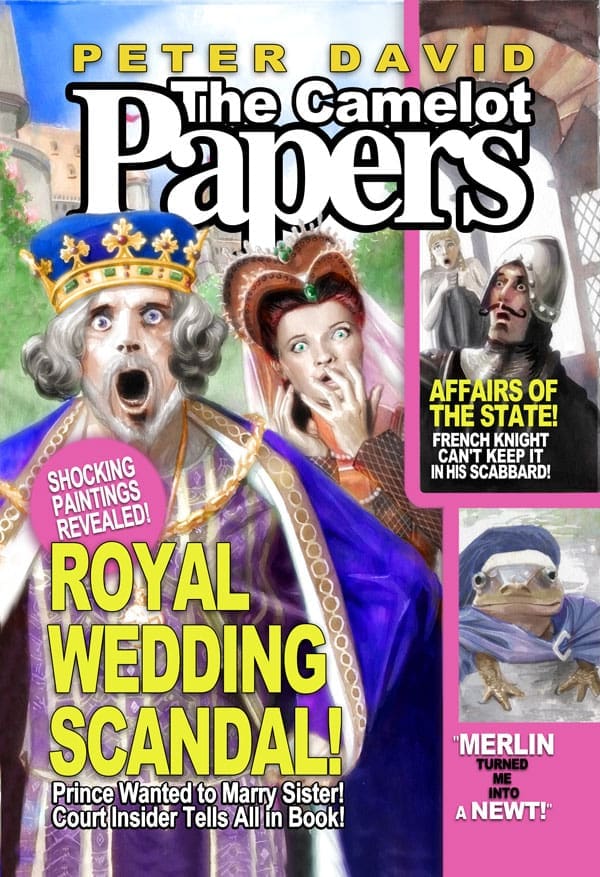
And now we bring you the musings of Phyllida Archer-Dowd, co-founder of the Children’s Protectorate Council:

It is my sad duty to report that the Disney organization has spiraled even further into the depths of degradation, shattered family values, and outright poor messages that have epitomized the organization’s animated features over the past years. One cannot help but have low expectations for a company that endorses sodomy, after all. (How else to explain the appalling company policies which have led to the quite-proper boycotts organized by our Baptist friends?) Certainly Disney’s recent animation outings have underscored the continued erosion of the once-family-friendly foundations that once epitomized the company. The Hunchback of Notre Dame, with its intense perversion of religious imagery and relentlessly dark tone, was absolutely horrid. Hercules was a film focusing on the adventures of ancient and discounted deities who have no relevance to today’s Christian society and certainly can only cause confusion in young children who are presented with the story-book Olympians as “gods.” It is left to the parents to try and clean up after Disney’s mess, and the company’s disregard for the difficulties of modern-day parenting is nothing short of horrendous.

But with the advent of Mulan, I’m afraid that we must truly take exception.

Tales from Direct Sales

digresssmlOriginally published August 7, 1998, in Comics Buyer’s Guide #1290

Reading that Diamond Comics was going to be endeavoring to implement a “street date” program certainly brought back a lot of memories. Several lifetimes ago, I worked in the direct sales department at Marvel Comics, and street dates were just one of the many issues and items that came up during the five years that I worked first as assistant sales manager and then sales manager, alongside (well, actually a few steps behind) the late, lamented Carol Kalish.

“The TruBatman Show,” Part 3

digresssmlOriginally published July 24, 1998, in Comics Buyer’s Guide #1288

“The TruBatman Show, Part 3 (Conclusion)”

He sits before me, looking at me with an assortment of emotions tumbling through him. I was sure of that. How could he not be feeling shock, confusion, anger, denial—every possible human emotion? Were I human, I could likely relate more closely to it.

Batman was surrounded by all his greatest foes and greatest friends. They were mingling with disconcerting informality, and he had an insane impulse to laugh at the absurdity of it all.