Press release from Marvel:
The sensation that swept the comic market is taking book readers by storm as Marvel is proud to announce that Dark Tower: The Gunslinger Born
In addition to conquering sales-charts, Dark Tower: The Gunslinger Born
Collecting all seven issues of the top-selling Dark Tower: The Gunslinger Born limited series, this hardcover explores the past of Roland Deschain, hero of Stephen King’s epic Dark Tower novels. Written by New York Times best-selling author Peter David and Dark Tower expert Robin Furth, visualized stunningly by Jae Lee & Richard Isanove and overseen by the watchful eyes of Stephen King—this graphic novel is a must-have for Dark Tower fans new and old!
Critically-acclaimed comic book creator Paul Pope writes in PUBLISHER’S WEEKLY, “The Gunslinger Born is the perfect starting point for those who think comics contain nothing but men in spandex costumes and masks”
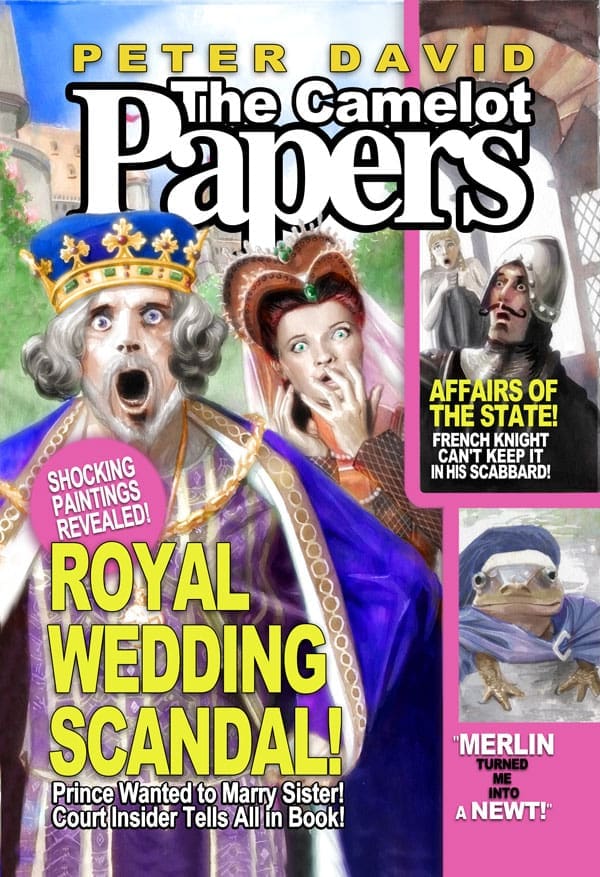


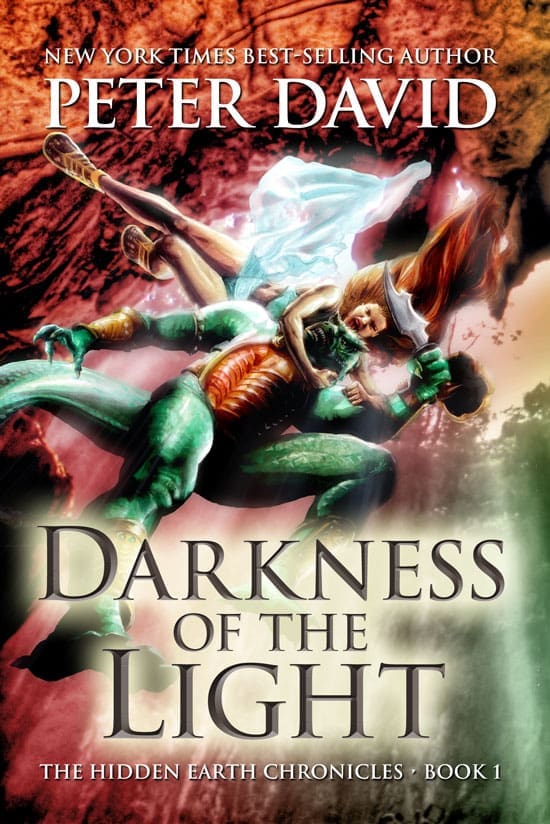
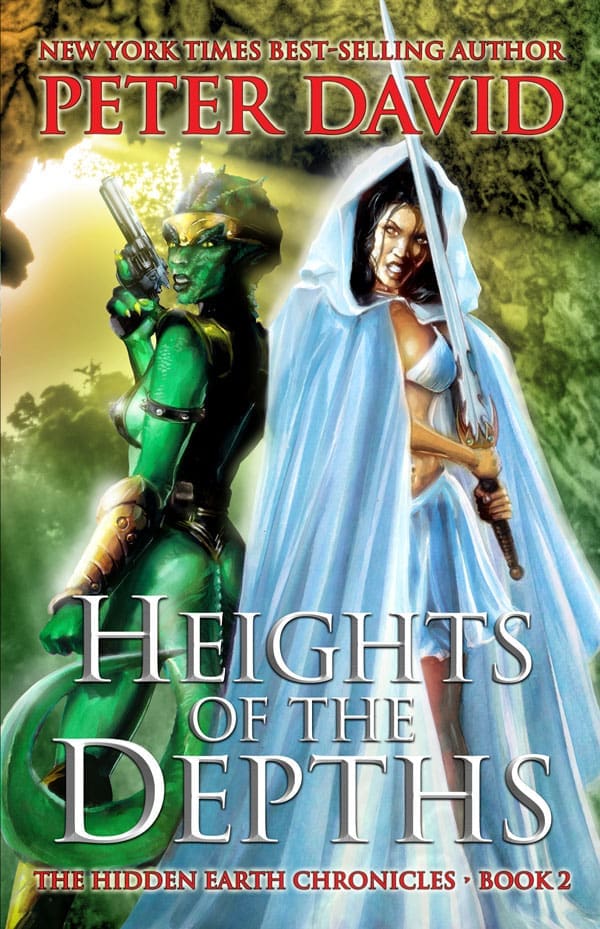
 •
• 
The Vertigo franchises literally require less new material to keep a presence on the comic book store shelves, to say nothing of conventional bookstores. The franchises are less vulnerable if the creative upkeep is less than the superhero titles. The greater the creative demand, the higher dependency the publishers have on the creative talent. And the lower the quality bar, the greater the vulnerability of the franchise. This all seems like common sense.
Yeah, no new content = franchise death. That isn’t a plus.
Vertigo is in the tradition of the cut-short EC Horror, only now in a comic book market propped up by the shrinking superhero audience. If DC had the nerve to cut back on their superhero content to only the Justice League and its fringes, and maybe take a year in the red, they could probably do substantially better by expanding Vertigo with the same talent pool. Comics needs to push aside the superhero audience.
That’s why the books going through numerous printings are better than franchises with trades and deluxe formats whose first printings stick around for a while.
You still see first printings of Darkseid vs Galactus on the shelves of some stores at cover price. The space those unsold books take up costs money.
That’s a minus in running a business, especially as far as attracting investors is concerned.
I think comics need to start pushing aside the superhero audience, and cut back to the best talent on the strongest superhero titles.
“I think comics need to start pushing aside the superhero audience, and cut back to the best talent on the strongest superhero titles.”
But who’s buying? DC would probably be happy to expand the Vertigo line…then again, if sales were there, this would have already happened.
I don’t see how DC or Marvel are going to push aside the superhero audience, unless either of those companies decides they can get by without a revenue stream. The top-selling Vertigo titles are selling around 20K, compared to the top-selling hero comics at over 100K. How does the publisher ignore the audience that’s 5X the size of the Vertigo audience, and just focus on that product.
“But who’s buying? DC would probably be happy to expand the Vertigo line…then again, if sales were there, this would have already happened.”
From what I’ve read, the Vertigo editors probably feel that they’re running at full capactiy. I’ve seen a couple of authors talk about how the process of getting a Vertigo comic going is *extremely* long and hard, much harder than any other place they’ve worked. Appartently, Vertigo feels that they have to be very protective of the style of comics that they present.
So they probably feel that if they tried to expand the line, the quality would go down.
“So they probably feel that if they tried to expand the line, the quality would go down.”
Logic, experience, and common sense would support this. Look at what happens when Marvel/DC decides to expand the number of books a character gets each month. It’s hard to sustain a high level of quality when producing more. And that’s even assuming there’s an acutal market of buyers ready and waiting for more product.
I’m aware that there are those who want comics to be about nothing other than spandex, because it’s all they know and all they want to know. My remark about “Gunslinger” and its ability to possibly draw in new readers, however, was posted in response to the grousings of “Johnny,” who was apparently felt that Paul Pope’s praise for “Gunslinger” amounted to a snub of the Vertigo line.
I suspect Johnny’s gripe has to do with the fact that “Gunslinger” is based on a Stephen King book and King, is, y’know, popular. Whereas the Vertigo line isn’t so much popular as it is, y’know, edgy. And as we all know, that which is popular is inherently less artistically valid than that which is not (Bill Myers said with great sarcasm).
Chalk it up to not being able to please everyone. Along comes a comic with the ability to draw in new readers and highlight the versatility of the genre, and still someone feels the need to kvetch.
I do not believe “pushing aside” super-hero comics, as another poster has suggested, will do anything to help the industry. Simply diverting talent and other resources to non-super-hero comics will do little or nothing to boost sales if publishers can’t get the message out to non-comics-readers that, hey, there’s something for everyone here. Rather than attempting to cannibalize its base, the industry needs to expand its base. There’s a lot of “greenfield” out there, because so many people don’t read comics due to their unawareness of the diversity of material available.
I’m not sure that the super-hero market is tapped out, either. Look at the success of the T.V. show “Heroes.” I believe the problem with the bulk of super-hero comics today is that they’re slavishly devoted to the cravings of an ever-dwindling crowd of fanatics who want everything just so: super-heroes wear costumes, continuity must be adhered to strictly, women must be drawn with grotesque basketball-like breasts, etc. I believe super-hero comics that defy these conventions and are properly marketed could have breakout potential.
The bottom line, however, is that the industry must continue to generate revenue now while looking for new revenue streams. Simply cutting back on super-hero books would starve the industry of the capital it needs to be able to expand.
“I think comics need to start pushing aside the superhero audience, and cut back to the best talent on the strongest superhero titles.”
Well, that’s a good way to save me a lot of money.
For the most part, the same readers who have been buying comics since the market bust in the early 1990s. Opening a comic book shop isn’t like opening a bar. People aren’t going to build up a lot of enthusiasm for a shop that caters to what they see as a seedy clientele where there’s no booze. Stop encouraging the guys like the comic book guy from the Simpsons, or Henchman 21 from the Venture Brothers, and there won’t be so much ick for most people to browse a comic store.
DC isn’t nurturing Vertigo like their superhero line, but the multiple printings of their trades indicates a substantially better return from their investment. It’s a viable alternative to a dying genre for the comic book medium. In the long term, DC would do better to start populating the comic racks with non-superhero comics. Stop nurturing the genre that’s killing the industry, and increase their investment in what works. That year or so in the red from nurturing the newer, non-incestuous, non-superhero market? That counts as investing too.
So because the 4 or 5 Spider-man titles published simultaneously have tolerated not-the-highest-of-quality, DC should keep all of their publications on display superheroes? I’m not sure how that doesn’t demonstrate my point that comic publishers need to do more to nurture alternatives to superheroes.
Well, Bill, you aren’t helping the discussion by refusing to brag about all the lucrative offers you get to join studios to take advantage of the demand for superhero comics.
I’ve heard less than 2% of an editor’s slushpile is readable, demonstrating for the most part grammar as it’s taught in schools. Multiply that fraction with the fraction of people who can draw demonstrating any knowledge of anatomy, and you have a very rare talent. I’m glad you feel so optimistic devoting your time to building a readership in the very small, very crowded pond.
Popcorn time.
It’s… interesting… that a certain poster is trying to manufacture a conflict with me, especially given that our opinions are not all that divergent on this subject. I agree that the comics industry is overly reliant on super-hero comics, for which there is a small and declining customer base (although, as I’ve said, I believe the genre might have a wider appeal if the big super-hero publishers were a bit less bound to “conventional wisdom” about what super-hero comics “must” be). I agree that the industry needs to expand its customer base in order to survive. And I agree that in order to do that, the medium needs to publish more material that has nothing whatsoever to do with super-heroes, and make people aware of it.
We merely disagree about how to accomplish this goal. I simply don’t believe that cutting back on super-hero comics will do much to bring other people to the fold.
Yet somehow this merits a personal attack. As Mr. Spock would say, “Fascinating.”
With respect to my own attempts to create and publish my own super-hero comic, well, as Data once said in an episode of Star Trek: The Next Generation, “I am aware of the difficulties.” But, as JFK once said, “We do these things not because they are easy, but because they are hard.”
You specifically disagreed with my post. Your attributing your actions to me isn’t interesting, it’s wrong.
Whaaat? What are you talking about?
I said it’s rare for someone to observe standard grammar and draw the human figure with any fidelity to anatomy. Is your devotion to conformity so severe that observing the rarity of a combination of disciplines insults you? What insult are you referring to?
All I gotta do is make the plainest of observations for y’all to go nuts on me. Priceless.
I’m not sure that the super-hero market is tapped out, either. Look at the success of the T.V. show “Heroes.” I believe the problem with the bulk of super-hero comics today is that they’re slavishly devoted to the cravings of an ever-dwindling crowd of fanatics who want everything just so: super-heroes wear costumes, continuity must be adhered to strictly, women must be drawn with grotesque basketball-like breasts, etc.
Yeah. The modern superhero is becoming a victim of over-stylization, where form and outer appearance is more important than content. That’s a sign of a form that’s either going to extinct, or burst into a new mode of expression. Hope it’s the latter, but given the normal mode of many fans, I’m afraid it’s more like the former (it’s practically gotten to the point of fetishism in many cases).
“DC isn’t nurturing Vertigo like their superhero line, but the multiple printings of their trades indicates a substantially better return from their investment.”
But that’s only one factor. Multiple printings of the TPBs implies that they generate more money per title *in the tradepaperback category*. However, the fact that TPBs have a significantly lower average price per page, plus the fact that TPBs don’t have advertising, implies that the higher sales of TPBs for Vertigo are not nearly as profitable as the higher sales of the Superhero titles in the monthly comics. Which one actually generates more money? It’s hard to say without knowing how much profit, not revenue but actual profit after production costs, is actually generated for each issue sold.
Furthermore, the longevity means only that they’re on the shelves longer. But while they’re on the shelves longer, there are many more superhero trades on the shelves. Right now there are more DC superhero TPBs in the top 50 than there are Vertigo titles. This means that the superhero titles are generating more revenue. A year from now many of those superhero titles won’t be in the top 50 anymore, but other superhero titles will have replaced them. Thus, there will *still* be more DC superhero titles in the top 50 than Vertigo titles, which means the superhero titles will *still* be generating more revenue.
Both divisions seem to be doing all right, but we can’t say that Vertigo is doing better solely because they’re performing better in longevity of trade paperbacks. That’s one factor out of several.
DC probably rips off the creators with trades. For the publisher, trades are probably mostly gravy.
If the creator can live off his parents or girlfriend/boyfriend/spouse for a year or two, he or she can come up with a long-term storyline and take that year or two to build an engaging continuity. After the first few trades come out, if he or she can build a huge readership, his or her take of the new issues would rise accordingly. The publishers get an inventory that stays in print, and the creators are free to milk the periodical for as long as they can keep up or take advantage of having their names attached to an inventory that stays in print if they want to negotiate greater creative challenges. It seems like common sense.
If you take the talent pool of a Marvel or a DC, you can have 20 or 30 more storylines like the 5 or so Vertigo lines doing this, and start chasing away some of the Simpson’s comic book guys and Henchmen 21s by cutting off their supply from the comic stores (or at least get them to go to the store in long pants when everyone else has put on their gloves). Then you’ve got a store you can tell your girlfriend you’re going to, and she’ll feel free reply “let’s go” with some genuine enthusiasm.
That’s right, the first printings stick around until the shop keeper feels like sticking them in their $1 box at the next comic convention.
The publishers do this to keep the shelves crowded with their own titles — they only care about making that non-returnable sale to the vendor, after which the vendor is on his own.
That isn’t good for the industry. Clean out the dying franchises crowding out comic shelves like medication resistant tuberculosis.
That doesn’t sound very different than saying Warren Buffett infrequently needing to trade out stocks isn’t a good sign of his superior leadership in running Berkshire Hathaway. Making your money with less activity is always superior to making money with more activity.
That was a very long post, Mike. However, none of it does anything to back up your assertion that the Vertigo division of makes more money than their superhero division.
This boils down very simply.
Vertigo: The titles continue to sell in trade paperback form longer.
Superheroes: Vastly outsell Vertigo in comic form. Vastly outsells Vertigo in Trade paperback (19 DC superhero titles in the top 100 as opposed to 5 Vertigo titles in the top 100). And the Superhero titles have lower production costs because they don’t have to pay anyone royalties for established characters.
So DC is selling way more of the superhero comics in both monthly form and TBP form, while they cost less to produce. There’s really no way to juggle the numbers Mike, everything we can see tells up that the superhero division is more profitable.
My assertion is that the repeated printings of the trades means the dollars spent on nurturing the Vertigo titles are better spent than the superhero titles. There is no defense against you attributing assertions to me I don’t stand by, and I’ve explicitly said I don’t stand by.
Is saving “Heroes for Hire” really that urgent to you?
1) ‘Heroes for Hire’ isn’t DC.
2) You’ve asserted that Vertigo titles make “a crapload” more money than DC’s superhero titles. However, the facts don’t support that. They sell a little better in one category and a lot worse in a much more profitable category.
3) Vertigo titles don’t even do *that* much better in trades. It’s not like the top 100 trades is dominated by ‘Shade the Changing Man’, ‘Preacher’, ‘Deadman’ and Hellrazer. They last on the charts a little longer, but they hardly have an unlimited lifespan. That chart also contains a showcase of Teen Titans that’s been out awhile, Justice League Elite, which hasn’t been a monthly in years, and a re-edition of JSA All-Stars. So there’s plenty of Superhero comics hanging around on the charts, too.
If you want to say that there are some DC superhero comics that aren’t very profitable, that’s fair enough. But you said that it was everything other than Batman and Superman, which doesn’t seem to be true. Longevity is a factor, but there are several other factors that indicate that Vertigo is profitable, but nowhere near making “a crapload” more than DC’s superhero comics. Not even per title.
Oh, and one other thing.
If you’re looking at Watchmen and thinking it’s proof that Vertigo titles are long lived, don’t. Watchmen is a story about superheroes in tights. More importantly, it was made several years before Vertigo existed. So whatever banner they might put on it now, it was created by the regular DC people, not the then-nonexistent Vertigo division.
My model was for DC, but my criticism applies to the big 2. If you want to name a superhero title my model renders vulnerable that makes your challenge to what I say urgent, be my guest.
Again, for dollars invested, the numerous printings of the Vertigo trades demonstrates a crapload better return for dollars invested in the line. You keep removing my qualifier. There is no defense against you removing my qualifiers to what I say.
Between investing $1 million in a ½% savings account, and investing $10,000 in a fund returning 5% — no, you aren’t going to be able to withdraw $½million from the 5% fund next year.
But you are a fool to think that just because the lower rate account is worth more that the lower rate account is where your money should be.
You yourself have referred to how DC will release a superhero title at any opportunity. n / ∞ approaches zero.
That compares poorly to the number of Vertigo trades going into numerous printings against the leaner line-up.
And I’ve revised what I’ve said casually since then.
All you seem to have against me is the wrongness I’ve removed from what I’ve said. If you can’t disqualify anything in my 9:04 post this morning, than it’s a wonder you feel the need to passive-aggressively challenge it by citing stuff I’ve made everything else I say independent from.
If I meant my Watchmen observation to prove anything, I would have said so. As far as I know, it isn’t a Vertigo title.
Mike, you’re truly amazing.
Thank you for not invalidating what I’ve said.
I didn’t have to, you’ve done that so well yourself.
Thank you for explicitly admitting you haven’t invalidated what I’ve said. It’s a wonder you feel the need to challenge anything I say.
Posted by Bill Mulligan
There was a comedian I saw who was being (badly) heckled and came back with something along the lines of “Sir, I’m holding a microphone and you’re holding a drink. God has a plan and you’re not in it.”
At the ’88 WorldCon Gripe Session when John Guidry and Justin Winston (both of whom i consider friends again, though it took a few years) were attempting to avoid taking responsibiliy for the puppies, as it were, John attempted to talk over me when he didn’t want to respond to my question. I reiterated it, more loudly. John remarked that he had the microphone and i didn’t.
A transcript recorded from the audience showed that it didn’t matter. (One of the few times i’ve been *glad* that i have a penetrating/carrying voice.)
I believe that the future Mrs. David may have been present at that session…
Posted by Bill Myers
With respect to the most recent trolling activity, I’m reminded of David Letterman’s response to a heckler back when he was doing stand-up in L.A.: “Thank you, son. We’ve just learned a valuable lesson there. Not everyone can do comedy. I appreciate that.”
Given my personal opinion of Letterman (The only truly funny Letterman bit i ever heard was Joe Piscopo’s simultaneous Slade/Letterman parody, “My Oh My”. Bought the whole mediocre album for that), i’d say Letterman’s whole career is a demonstration of that fact.
Posted by Mike
Thank you for explicitly admitting you haven’t invalidated what I’ve said. It’s a wonder you feel the need to challenge anything I say.
Unlike some here, i generally don’t feel such a need; proof by inspection is at least as valid as proof by induction; “casual to the mosr obvious obeserver” a a math prof i once had liked to say…
I don’t know what you mean by the rest, but something we have in common is we have no urgent need to present our irrational opinions as rational. Your apparent tolerance of this kind of vulnerability perhaps allows you to not feel threatened by some guy doing a little naval-gazing demonstrating no fidelity to the rules you play by, which seems to be the worst anyone can explicitly say about what I do here.